

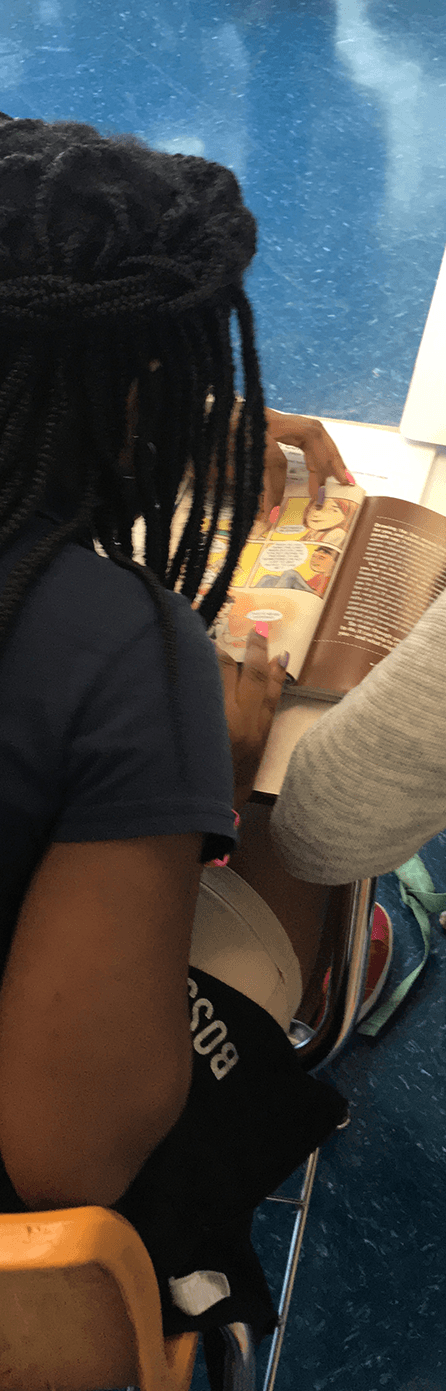
Strategic Adolescent Reading Intervention (STARI)
STARI is a literature-focused, Tier II intervention for students in grades 6-9 who read two or more years below grade level.
By the time students reach the middle grades, they are expected to read to learn instead of to learn to read. But for the significant number of students who can’t decode or fluently read more complex text, this shift spells trouble. In addition, older students (Grades 6-9) who need targeted, intensive reading instruction are still adolescent thinkers! They do not find typical remedial materials engaging.
STARI is built around key research findings:
- Adolescent struggling readers need to work on both basic reading skills and the skills that underlie deep comprehension: academic language, perspective-taking, and critical reading.
- Texts need to engage students with issues in their lives and in the world.
- Peer talk about text can develop reading engagement, perspective-taking, and critical reading.
Using research-based practices and highly engaging texts, STARI addresses gaps in fluency, decoding, reading stamina, and comprehension, aiming to move struggling students to higher levels of proficiency at the end of one year. STARI actively engages students in discussions of cognitively challenging content aligned to the Common Core and other 21st century standards.
STARI is intended to be a “double dose” intervention that should not take the place of core curriculum. We recommend that schools devote either 45-60 minutes, 5 days a week, or 90 minutes on an A-day/B-day schedule, to STARI.

STARI has helped me become a better reader because talking with others and hearing the opinions of others can help me learn more about what I'm reading about.
Jasmine, 7th Grade Student
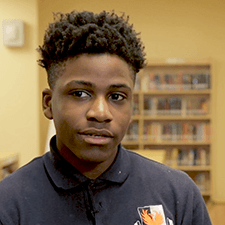
STARI has actually helped me to become a better reader because, at the beginning of the year, I thought I wasn't much of a fluent reader. I kept pausing in the middle of reading a sentence. But the more I read, the more practice it took ... I just became better.
AJ, 8th Grade Student
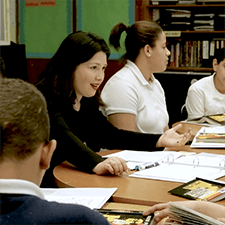
In some of the other intervention programs that I've taught there's really an emphasis on one component of language, so the emphasis might just be on fluency or might just be on decoding or just on comprehension.
STARI gives me the opportunity to reach across to where a lot of the gaps are. In my student group, you have English language learners, students with IEPs, and students who have just been low-performing or plateauing in their reading skills.
I think that having that holistic approach to developing reading skills, including the discussion components, really makes a big difference.
Ariadna Phillips-Santos, 8th Grade Teacher
Hear from more STARI teachers and students:


Development of STARI was led by Lowry Hemphill (Wheelock College) through a SERP collaboration with Harvard University and four Massachusetts school districts. The research reported here was supported by the Institute of Education Sciences, U.S. Department of Education, through Grant R305F100026 to the Strategic Education Research Partnership as part of the Reading for Understanding Research Initiative. The opinions expressed are those of the authors and do not represent views of the Institute or the U.S. Department of Education.
The STARI Team
